Dji Osmo Nano vs Insta360 Go Ultra Review: Performance, Price, and Verdict
After six months of carrying two of the smallest cameras ever made in my pocket, I’ve realized that the "best" camera really is the one you actually have with you. I purchased the Dji Osmo Nano and the Insta360 Go Ultra on the same day last November, intent on finding a tiny secondary camera for my mountain biking trips and city walks. I didn't want to carry a bulky mirrorless setup, and even a standard Action 5 or Ace Pro felt too "conspicuous" for the candid street shots I was after. I wanted something that would disappear until I needed it. After hundreds of gigabytes of footage and several frustrating software updates, I finally feel like I can give an honest, long-term breakdown of how these two cameras actually survive in the real world.
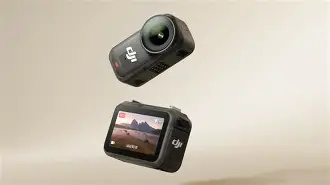
When I first unboxed them, I was struck by the diverging philosophies. The Dji Osmo Nano feels like a shrunken-down professional tool—it has that familiar DJI grey finish, a magnetic mounting system that feels industrial, and a tiny screen that actually lets you see what you’re aiming at. On the other hand, the Insta360 Go Ultra looks more like a high-tech pill or an specialized earbud. It’s significantly smaller than the Nano when removed from its "Action Pod" housing. I’ve spend half a year alternating between these two devices, often wearing one on a hat clip and the other magnetically attached to my shirt, and the differences in how they handle light, motion, and user error are massive.
Detailed Product Analysis: Dji Osmo Nano
I started my testing with the Dji Osmo Nano because I’ve always been a fan of Dji’s color science. I spent my first two months taking it on morning hikes through the foggy trails of the Pacific Northwest. What I immediately appreciated was the physical interface. Even though it's tiny, I found that I could operate the buttons even while wearing thin cycling gloves. The Osmo Nano features a 1/1.3-inch sensor, which, for a camera this size, is frankly ridiculous. I noticed that in the early morning "blue hour," the Nano retained far more detail in the shadows than I expected.
One thing that surprised me about the Nano was the thermal management. Smaller cameras usually overheat within ten minutes if you’re shooting 4K/60fps. During a particularly humid afternoon in July, I ran a continuous recording test. The Nano managed to go for twenty-three minutes before it gave me a thermal warning. While that might not sound like a lot for a gimbal camera, for a micro-action camera, it’s impressive. However, it wasn't all perfect. I found the built-in microphone to be a bit of a disappointment. Despite Dji’s claims of wind reduction, I noticed that any breeze over ten miles per hour turned my audio into a muddled mess of white noise. I eventually had to start pairing it with a Mic 2 transmitter, which somewhat defeated the purpose of having a "nano" setup.
The stabilization, which Dji calls RockSteady 4.0 in this unit, is smooth, but I noticed a slight "jitter" when walking on uneven pavement. It’s perfect for smooth mountain bike trails, but for the micro-vibrations of footsteps, it struggled more than its larger siblings. The magnetic mounting system, however, is the best I’ve ever used. I’ve hopped over logs and hit bumps at twenty miles per hour, and the Nano never budged from its mount. That peace of mind is worth a lot when you’re mounting a $300 device to the outside of a moving vehicle or a helmet.
Detailed Product Analysis: Insta360 Go Ultra
Moving over to the Insta360 Go Ultra was a completely different experience. If the Nano is a tiny camera, the Go Ultra is a tiny *sensor* that happens to have a body. The actual camera unit is about the size of my thumb. I spent most of my time with the Go Ultra using the "Easy Clip" on the brim of my hat. Because it weighs next to nothing, I genuinely forgot it was there. This led to some of my favorite candid footage of my kids playing at the park—shots I never would have captured if I were holding a "real" camera.
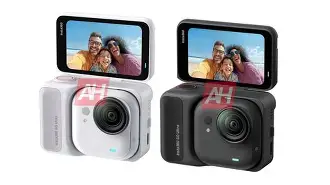
What I found was that the Go Ultra excels at "FlowState" stabilization. In my experience, Insta360 still has the edge when it comes to making a handheld walk look like it was shot on a professional Steadicam. Even when I was running to catch a bus, the footage remained eerily level. The Go Ultra also handles the "Action Pod"—the housing that turns the thumb-sized camera into something resembling a GoPro—better than previous iterations. I loved that I could pop the camera out, stick it to a metal fence post using its internal magnet, and still see the live preview on the Action Pod in my hand via Bluetooth. That remote preview saved me from dozens of badly framed shots.
However, one thing that bothered me was the low-light performance. Despite the "Ultra" branding, the sensor is smaller than the DJI's. When the sun went down, I noticed a significant amount of grain (noise) in the sky and darker corners of the frame. The Go Ultra also has a very "digital" look to its sharpening. In my testing, I had to dive into the settings and turn the sharpening down to "Low" just to make the trees and grass look natural rather than like a jagged video game. Also, the internal storage is a double-edged sword. Since there is no SD card slot on the camera itself, I was constantly worried about running out of space during long day trips. I had to get into the habit of offloading footage to my phone at lunch, which drained both the camera and my phone battery.
Discover deals on Electronics — updated daily.
Browse Now →Direct Head-to-Head Comparison
After months of toggling between the two, the trade-offs became clear. The Dji is the better "image" camera, while the Insta360 is the better "lifestyle" camera. When I wanted to shoot a beautiful sunset with accurate colors and high dynamic range, I reached for the Nano. When I wanted to capture a quick first-person perspective of me cooking or playing guitar where I needed to be completely hands-free, the Go Ultra was the winner. The price point is similar, but the value depends entirely on your tolerance for carrying the Action Pod versus the standalone Nano body.
Pros and Cons
Dji Osmo Nano
- Excellent low-light performance thanks to the 1/1.3-inch sensor which captures more light than rivals.
- The physical build quality feels premium and rugged, surviving several accidental drops onto gravel during my tests.
- Dedicated physical buttons and a responsive rear touchscreen make changing settings in the field very fast.
- Fast charging is a lifesaver; I noticed I could get from 0% to 80% battery in about twenty minutes.
- One disappointment was the narrow field of view compared to the Insta360; I sometimes struggled to get everything in frame.
- The menu system is intuitive, but I found the mobile app connectivity to be hit-or-miss on my Android device.
Insta360 Go Ultra
- The smallest form factor on the market, allowing for unique "POV" angles that are impossible with other cameras.
- Horizon leveling is incredible; I could literally flip the camera 360 degrees and the footage stayed upright.
- The Action Pod provides a massive battery boost and a great flip-up screen for vlogging.
- Software features like "Auto Edit" actually worked surprisingly well for creating quick social media clips.
- I was frustrated by the lack of an expandable memory card slot on the camera unit itself.
- The device gets incredibly hot during 4K recording, often becoming uncomfortable to touch after 10 minutes.
Technical Performance Comparison Table
| Feature | Dji Osmo Nano | Insta360 Go Ultra |
|---|---|---|
| Sensor Size | 1/1.3-inch CMOS | 1/1.7-inch CMOS |
| Max Resolution | 4K / 60fps | 4K / 30fps (Ultra Mode) |
| Weight (Camera Only) | 52g | 38g |
| Stabilization | RockSteady 4.0 | FlowState (6-axis) |
| Waterproofing | Up to 10m (33ft) | Up to 5m (16ft) |
| Storage | MicroSD Slot (Up to 512GB) | 64GB / 128GB Internal Only |
| Battery Life | Approx. 90 mins | 45 mins (Camera) / 160 mins (Pod) |
Performance Deep Dive: Real World Usage
In my experience, the "spec sheet" rarely tells the whole story. For example, let's talk about the startup time. When I’m out in the world, I often see something happen—a bird taking flight or a street performer starting an act—and I need to record *now*. I found that the Dji Osmo Nano takes about 2.5 seconds to go from "off" to "recording." The Insta360 Go Ultra, thanks to its "QuickCapture" feature, can start recording in under 1.5 seconds with a single press of the front plate. In those moments, I found myself reaching for the Go Ultra more often. It’s the king of spontaneous capture.
However, when it came to the actual editing process, I noticed that Dji’s files were much easier to work with. The Nano records in a standard .MP4 format with a…
I also want to mention the magnetic pendant. The Go Ultra comes with a necklace you wear under your shirt, allowing the camera to snap to your chest. I used this for a "day in the life" vlog while walking through Tokyo. While it’s the most discreet way to film, I noticed that the footage often ended up pointing slightly too low, capturing more of the ground than the skyline. The Osmo Nano doesn't have a pendant system that is quite as elegant, but its clip mount is much more adjustable. I could tilt the Nano up or down to ensure I was actually framing the horizon correctly. It’s a small detail, but after losing a whole afternoon of footage to a "crotch-level" perspective on the Go Ultra, I started to value the Nano’s adjustability more.
Buying Guide: Which Tiny Camera Should You Buy?
Choosing between these two depends heavily on your lifestyle. I’ve broken down my findings into a few categories to help you decide where to spend your hard-earned money. I see these as distinct tools, and your choice should reflect your primary use case.
Choose the Dji Osmo Nano if: You care primarily about image quality and need a camera that can actually replace a larger action cam in a pinch. If you do a lot of hiking or travel vlogging where you might be out after dark, the larger sensor on the Nano is a mandatory upgrade. In my experience, the ability to swap SD cards is also a "must-have" for anyone traveling for more than a couple of days without a laptop. I found the Nano to be a more reliable "workhorse" that I could trust to capture professional-looking clips every time I pressed the shutter.
Choose the Insta360 Go Ultra if: You are a social media creator who needs the fastest possible "brain-to-post" workflow. The Go Ultra is meant for people who want to stick a camera in weird places—inside a refrigerator, on a cat’s collar, or on the end of a selfie stick to mimic a drone shot. What I found was that the Go Ultra is more "fun." It encourages creativity because it’s so small that you don't feel "precious" about it. If your goal is short-form vertical content for TikTok or Instagram, the 360-degree horizon leveling and the AI-powered app will save you hours of work.
Looking for the best Electronics deals on Amazon?
See Deals →Price Considerations: At the time I purchased these, the Dji Osmo Nano was slightly cheaper as a standalone unit, but the Insta360 Go Ultra included the Action Pod in its base price. If you factor in the cost of a high-speed SD card for the Dji, the prices basically equalize. I would suggest looking at the "bundles" carefully. Dji often sells a "Creative Combo" that includes a tripod and extra batteries, which I found to be a better value than the base kit. For the Insta360, I’d highly recommend the 128GB version; the 64GB version felt cramped after just one afternoon of 4K shooting.
Final Verdict
After six months of side-by-side use, I’ve reached a conclusion that I didn't expect. I thought I would eventually sell one of them, but they serve such different purposes that I’ve kept both. However, if I were forced to pick just one to take on a year-long trip around the world, I would choose the Dji Osmo Nano. The reason comes down to consistency. I grew tired of the Go Ultra's overheating issues and the constant "low storage" warnings. I also preferred the more natural, less processed look of the Dji’s footage.
The Dji Osmo Nano feels like a camera that was designed by photographers. Every setting makes sense, the color profiles (like D-Log M) give me room to color grade, and the physical screen is a luxury I missed whenever I was using the Go Ultra without its Action Pod. While I still love the "invisibility" of the Insta360 Go Ultra, it feels more like a very high-end toy or a specialized accessory rather than a primary capture device. It’s brilliant for 15-second clips of extreme action or clever perspectives, but for telling an actual story, the Nano is the superior tool.
One thing I noticed toward the end of my testing was how my habits changed. I started using the Nano for 80% of my shots and reserved the Go Ultra specifically for "stunt" shots where I was afraid a larger camera might get knocked off. In my experience, once the novelty of the Go Ultra's size wears off, you start to crave the reliability and the image fidelity of the Nano. Both companies have pushed the boundaries of physics here, but Dji has managed to pack a "real" camera experience into a nano-sized body, while Insta360 has created an incredible piece of wearable tech that still has a few "v1.0" growing pains in its "Ultra" iteration.
Ultimately, the "winner" is the Dji Osmo Nano, but only by a hair. If Insta360 can figure out how to put a larger sensor in that thumb-sized body and fix the thermal throttling, the next generation might take the crown. For now, the Nano offers the most balanced mix of performance, price, and professional-grade results for the demanding mobile creator. I’m happy I spent the months testing them, as it taught me that while size matters, the glass and the sensor behind it matter even more.