Don't Buy the Zowie Za11 B Until You Read This Full Analysis
The competitive gaming landscape is an arena where milliseconds and millimeters determine the boundary between victory and defeat. For the dedicated first-person shooter (FPS) player, the mouse is not merely a peripheral; it is a specialized tool that serves as a direct interface between human intent and digital execution. In this pursuit of precision, BenQ’s Zowie brand has carved out a singular reputation for its "shape-first" philosophy. The Zowie ZA series, and specifically the ZA11-B, represents a culmination of ergonomic research aimed at a very specific subset of gamers: those who require high-profile support for palm or claw grips. However, in an era where the market is flooded with ultra-lightweight housings, honeycomb shells, and cordless technology, the ZA11-B stands as a polarizing, purist option. Before investing in this device, it is essential to understand why its design choices are intentionally restrictive and whether those restrictions serve your personal mechanical needs or hinder your performance.
The Philosophy of Functional Minimalism
To understand the Zowie ZA11-B, one must first understand the design ethos of Zowie. Unlike competitors who focus on RGB lighting, high-button counts, or bloated software suites, Zowie prioritizes physical comfort and driverless plug-and-play functionality. The "B" revision of the ZA11 brought significant internal updates to a classic shell, most notably shifting from the aging 3310 sensor to the industry-standard PixArt 3360. While the 3360 is no longer the absolute bleeding edge of sensor technology, it remains a "flawless" sensor, offering 1:1 tracking without hardware acceleration or jitter at the polling rates used by professional athletes. This focus on reliability over marketing-driven specifications is a hallmark of the brand, but it also means the mouse lacks the customization options found in modern gaming software.
The ZA11-B is the largest of the ZA family, which also includes the ZA12-B (medium) and ZA13-B (small). It is designed specifically for gamers with larger hands or for those who prefer their palm to be completely filled by the mouse’s chassis. In a market trending toward smaller, "fingertip-only" mice, the ZA11-B remains one of the few high-tier options for users who prioritize the stability offered by a high rear hump.
Physical Architecture and Ergonomics
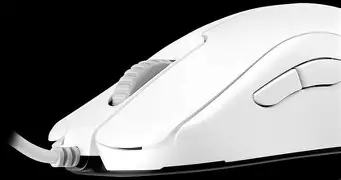
The defining characteristic of the Zowie ZA11-B is the high-profile hump located toward the rear of the mouse. This is a dramatic departure from the Zowie FK series, which is low-profile and centered, or the EC series, which features an asymmetrical, ergonomic slope for right-handed users. The ZA11-B is symmetrical—though not truly ambidextrous in this "B" iteration, as it only features side buttons on the left—and focuses heavily on the verticality of the shell. This high hump acts as an anchor point for the lower part of the palm. For users who employ a "palm grip," this provides maximum contact area, which translates to a high degree of control during large, sweeping arm movements. For "claw grip" users, the hump provides a necessary brace against which the palm can push, allowing the fingers to curl more aggressively over the primary buttons.
The coating of the ZA11-B is a uniform matte black finish. It is designed to provide a consistent feel regardless of whether the user’s hands are dry or slightly perspiring during an intense match. While some users find the coating to be a "fingerprint magnet" that requires regular cleaning, its primary function—providing a non-slip surface—is exceptionally well-executed. The side walls of the mouse feature a slight inward curve, which, combined with the flared front, ensures that lifting the mouse is effortless. This is a critical factor for "low-sensitivity" players who must frequently reset their mouse position on large desk mats.
Technical Performance and Internal Upgrades
The transition to the PixArt 3360 sensor solved the primary complaint regarding the original ZA series: the "tilt-slam" issue found in the older 3310 sensor. Modern professional play requires fast flick shots, and the 3360 sensor ensures that even the most violent movements do not cause the sensor to lose focus or spin out. The polling rate can be toggled between 125Hz, 500Hz, and 1000Hz via a physical button on the underside, ensuring compatibility with various system refresh rates without the need for a software driver.
Shop the latest Electronics picks on Amazon.
Browse Now →The primary clicks on the ZA11-B use Huano switches, which are known for being stiffer and more tactile than the Omron switches found in many other consumer mice. This stiffness is intentional; it prevents accidental clicks during high-intensity maneuvers and provides a clear, rhythmic feedback loop for the user. However, for those who play games requiring rapid-fire spamming of the left click (such as certain MOBAs or RTS games), the Huano switches may lead to quicker finger fatigue compared to lighter alternatives. The side buttons have also been refined in the "B" version. They are large, easy to actuate, and positioned high enough to avoid accidental clicks from the thumb. The removal of the right-side buttons—a change from the original ZA series—makes the mouse more comfortable for right-handed users by removing a point of irritation for the ring and pinky fingers, but it does leave left-handed users without a viable option in this specific product line.
Detailed Comparison to Similar Models
The following table illustrates how the ZA11-B positions itself against its direct siblings and competitors in the high-profile mouse category.
The Buying Guide: Is the ZA11-B Right for You?
Purchasing a Zowie ZA11-B is a commitment to a specific mechanical style. To determine if this mouse should be on your desk, consider the following three factors: hand size, grip style, and game type.
Assessment of Hand Size
The ZA11-B is a large mouse. If your hand measures less than 18.5 centimeters from the base of the palm to the tip of the middle finger, you will likely find the ZA11-B unwieldy. Users with smaller hands often struggle to reach the primary buttons comfortably while their palm is anchored to the hump. If you have smaller hands but love the idea of a high-hump mouse, the ZA13-B is widely considered the superior choice, as its smaller footprint makes the high profile more manageable for micro-adjustments.
Analyzing Grip Mechanics
Do you find that your hand feels "hollow" or unsupported when using a standard mouse? If so, you are likely a palm or aggressive claw gripper. The ZA11-B is engineered to fill that void. However, if you are a fingertip gripper—meaning your palm never touches the back of the mouse—the ZA11-B will be a detriment to your performance. The high hump will collide with your palm when you try to pull the mouse down for recoil control, limiting your vertical range of motion.
Looking for the best Electronics deals on Amazon?
View Offers →Game Environmental Requirements
The ZA series was birthed in the world of tactical shooters like Counter-Strike: Global Offensive and Valorant. In these games, horizontal tracking and stable crosshair placement are more important than vertical hyper-mobility. The added weight and the palm-fill of the ZA11-B provide a sense of "heaviness" to your aim, which can actually help stabilize a shaky hand. Conversely, in fast-paced arena shooters like Apex Legends or Quake, where you are constantly tracking targets vertically and doing 180-degree turns, the weight and profile of the ZA11-B may feel sluggish.
Practical Alternatives
If the ZA11-B seems close but not quite perfect, there are other paths to explore. Those who want the same width but less height should look at the FK1-B. Those who want a more ergonomic, right-handed tilt should consider the EC1. For users who are interested in the high hump but want a "modern" lightweight experience with wireless capabilities, the market has shifted toward clones and inspired designs, but many purists argue that no other manufacturer has perfectly replicated the specific curvature of the ZA series hump.
Conclusion: The Purist's Instrument
The Zowie ZA11-B is not a mouse designed for the masses. It is a specialized instrument meant for a specific hand size and a specific way of holding a controller. It ignores the trends of the current generation—RGB, wireless, sub-50g weight—in favor of a shape that has been proven through years of professional competition. For the right user, the stability provided by that iconic high rear hump is irreplaceable. It offers a "locked-in" feeling that provides the confidence needed to hold long angles and execute precise flick shots.
However, if you are looking for a general-purpose mouse that facilitates both work and play, the ZA11-B may disappoint. Its 16-step scroll wheel is cumbersome for reading documents, and its lack of software makes it inflexible for those who need macro support or non-standard DPI stages. Furthermore, for the "lightweight" enthusiasts, the 82-gram mass will feel outdated. Ultimately, you should only buy the Zowie ZA11-B if you have large hands and have found that other mice leave your palm feeling unsupported. In that specific niche, it remains one of the most effective tools ever designed for the human hand. If you prize shape and consistency above all other specifications, the ZA11-B is a masterclass in ergonomics. If you value features and versatility, you will likely find better value elsewhere in the contemporary electronics market.