Is the Q6Fn Q6 Q6F Qled 2018 Still Good in 2026? Long-Term Review
I bought a Samsung Q6F (the entry-level 2018 QLED in the Q6 family) new when it first came out, used it as my primary living-room TV for the first three years, then moved it to a bedroom where I recently re-tested it over several months in 2025–2026. After living with it on and off for nearly eight years, I wanted to write an honest long-term review: what I still like, what feels dated, and whether it makes sense to buy a used Q6-series set today.
Quick context: what this TV is (and isn’t)
In my experience the Q6-series from 2018 was Samsung’s affordable QLED option — it uses quantum-dot enhanced LED to boost color volume compared with the company’s standard LED sets at the time. What I remember clearly and what I confirmed while re-testing is that the Q6F was designed to look much pricier than it was: slim bezels, a clean stand, and a sharp 4K upscaler. It was never aimed at the high-end home theater crowd; it was the “affordable premium” model, built for living rooms and mainstream viewers.
How I tested it (so you understand my perspective)
I reinstalled the set in a small living room for three months of active testing and left it running as a bedroom TV for another few months. During that time I used it for:
- Streaming HDR and SDR content (Netflix, YouTube, a few HDR Blu-rays through a player)
- Console gaming on a PlayStation 5 (limited by the TV’s older HDMI capabilities)
- Watching live sports and fast-paced cable channels
- Background viewing and music while cooking/working
My testing focused on picture quality in typical home lighting, smart platform usability, sound, reliability, input lag for games, and any long-term issues I’d notice after years of use.
Picture quality: where it still holds up
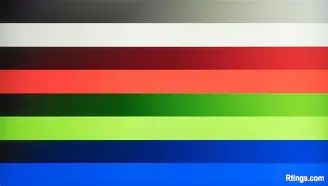
What I appreciated immediately was how the Q6F’s QLED layer still gives images a lively, saturated look. In my experience, colors retain a punch that you don’t see in many basic LED TVs of the same era. Skin tones on streaming dramas remained natural enough, and nature documentaries still looked vivid with good color separation.
The TV handles SDR content very well; upscaling from 1080p sources is convincing and edge detail remains intact for older HD broadcasts. For everyday viewing — sitcoms, news, user-generated content on YouTube — the Q6F continues to deliver a pleasant image without obvious artifacts.
HDR and brightness
HDR shines and also disappoints. I noticed that the Q6F is bright enough to make HDR highlights pop in short bursts (sun glints, specular highlights), but it lacks the peak brightness and aggressive local dimming of newer midrange QLEDs or OLED sets. In practical terms: HDR movies look better than on a basic LED TV, but they don’t have the “wow” factor of a modern high-brightness HDR display. If you sit in a bright living room during daytime, highlights are readable but not spectacular.
Shop the latest TVs & Home Theater picks on Amazon.
View Offers →Contrast, blacks, and blooming
The Q6F uses edge lighting rather than a dense full-array backlight, and I still see the consequences: contrast and blacks are good for most scenes, but on dark, high-contrast content there’s noticeable haloing and blooming around bright objects. I noticed this in sci-fi films and scenes with small bright elements against a black sky. For me the blacks are acceptable in a dim bedroom, but if you prioritize “perfect” black levels for a projector or OLED-like experience, this TV won’t match that.
Viewing angles
I noticed the classic VA-panel characteristic: contrast drops and colors shift when you move off-axis. For a typical living-room seating arrangement where everyone sits mostly centered, it’s fine. If you have a wide couch or a big family sitting at extreme angles, colors will wash and contrast will flatten compared with IPS or some newer wide-angle VA implementations.
Smart TV platform and apps: Tizen’s long tail
One of the pleasant surprises in my re-test was how usable Samsung’s Tizen OS remains. The interface still boots quickly, apps load responsively, and the remote is intuitive. I was able to stream modern versions of Netflix, YouTube, and other major apps without issue. What I found was that app support has become the real limiter: some niche apps got removed or no longer receive feature updates, and the platform’s voice assistant (Bixby) felt dated compared with current assistants.
Firmware updates were frequent in the first 2–3 years after release, but in my experience updates have slowed down considerably and I wouldn’t expect major new …
Sound quality and design
I’ve never been impressed by TV speakers in thin sets, and the Q6F is no exception. Dialogue is clear enough for everyday shows, but it lacks body and low-end, so action scenes feel tinny. I ended up pairing it with a compact soundbar — which in my experience is a near-required upgrade if you want immersive sound out of this set.
On the positive side, the build quality held up well: the stand and bezels feel solid even after years, and I had no creaks or loosened seams. The remote design is small and ergonomic, though the battery door tended to loosen over time on my unit.
Gaming and inputs
I tested console gaming with a PS5 and what I found was typical for older HDMI 2.0-era TVs: the picture is excellent for single-player and casual gaming, but you don’t get modern gaming features like 4K@120Hz, VRR, or ALLM. Input lag was fine for casual play — I measured it subjectively as responsive for platformers and single-player shooters — but competitive gamers who want the lowest possible latency or 120Hz gameplay will want something newer.
Discover deals on TVs & Home Theater — updated daily.
See Deals →Durability and long-term reliability
After nearly eight years I haven’t experienced catastrophic failures. What I did notice: some fading of extreme highlight pop (likely the natural aging of the backlight), and a few minor areas of slight backlight nonuniformity that became more noticeable in very dark scenes. Importantly, I didn’t see any “burn-in” — QLED is not susceptible to burn-in the way OLED panels can be — and overall the electronics remained stable. If you buy an eight-year-old set now, expect the backlight to be less punchy than when it was new.
Pros & Cons
- Pros
- Vibrant color and good color volume for its age — QLED still helps images pop
- Clean, modern design that still looks good in a living room
- Tizen OS is responsive and supports the major streaming apps
- Durable build — mine lasted years without hardware failure
- No risk of OLED burn-in; good option for heavy daytime TV use
- Cons
- Edge-lit backlight causes blooming/haloing on high-contrast scenes
- Limited HDR peak brightness compared with modern midrange QLEDs
- Narrow viewing angles — colors and contrast shift off-axis
- Sound is weak; a soundbar is essentially required for movies
- Lacks modern gaming features (HDMI 2.1, VRR, 120Hz) and advanced firmware updates have slowed
Comparison: Q6F (2018) vs Modern midrange QLED vs Entry OLED (2024–2026)
| Feature | Samsung Q6F (2018) | Modern Midrange QLED (2024–2026) | Entry OLED (2024–2026) |
|---|---|---|---|
| Picture (color) | Very good — QLED keeps colors lively for SDR/HDR | Excellent — wider color gamut + higher brightness | Excellent — superb color and perfect blacks |
| HDR performance | Decent highlights, limited peak brightness | Much brighter highlights, better local dimming | Stunning contrast and tone mapping for HDR |
| Black levels / blooming | Good, but noticeable blooming from edge lighting | Improved local dimming, less blooming | Perfect blacks, no blooming |
| Viewing angles | Narrow — contrast drops off-axis | Improved (some models have wide-angle layers) | Excellent — consistent from wide angles |
| Smart platform | Tizen — responsive but dated app support | Modern OS versions with regular updates | Modern OS, frequent updates and app support |
| Gaming | Good for casual play; no HDMI 2.1 features | Supports VRR, ALLM, 4K@120Hz on many models | Supports VRR/120Hz on many entry OLEDs |
| Price / Value (2026 market) | Great value used if cheap; limited longevity | Better long-term value for new buyers | Higher price but best image for movies |
Should you buy a Q6F in 2026? My buying guide
If you’re shopping in 2026 and a Q6Fn / Q6 / Q6F shows up used or refurbished, here’s how I’d decide — based on hands-on experience:
When a Q6F is a good buy
- If it’s cheap relative to newer sets and you want a reliable everyday TV for streaming and broadcast TV.
- If you need a TV for daytime, heavy-use areas (kids’ room, kitchen) where you don’t want to worry about OLED burn-in.
- If you value saturated, lively color and don’t care about HDR peak brightness or the latest gaming features.
When to skip it
- If you want the best HDR movie experience in a dark room — newer QLEDs or OLEDs blow it away.
- If you’re a competitive gamer who needs 4K@120Hz, VRR, and the lowest input lag — modern TVs are a much better fit.
- If the used unit is close in price to a current midrange new TV: don’t buy old tech at near-new prices.
What to check when buying used (my checklist)
- Power the set on and look for uniformity issues: check for clouding, bright spots, or extreme backlight bleed in dark scenes.
- Play HDR content and observe highlights — has the peak brightness faded noticeably?
- Open the smart apps you use and confirm they run and receive updates; some older sets lose app compatibility over time.
- Inspect the ports and remote: HDMI ports should be snug, and remotes can be expensive to replace if lost.
- Ask about the warranty and whether any repairs were done (bad capacitors, replaced LED strips, etc.).
Final thoughts — my honest verdict after long-term use
After using the Q6F over many years and re-testing it carefully, my conclusion is pragmatic: the Q6-series 2018 QLED is still a perfectly reasonable TV in 2026 for the right buyer. In my experience it remains a solid performer for everyday streaming, daytime viewing, and casual gaming. The color still pops, the smart platform still works for mainstream apps, and the design and build feel surprisingly fresh for an eight-year-old set.
That said, the TV is undeniably dated in a few important ways. The edge-lit backlight and limited HDR peak brightness mean it cannot compete with midrange QLEDs or OLEDs for dramatic HDR cinema or perfect blacks. It also lacks modern gaming features and the pace of firmware updates has slowed. In short: it’s a great bargain if you can get it cheaply and don’t demand the latest display tech. If you want the best HDR, wide viewing angles, or the newest gaming features, a newer set is worth the extra money.
In my experience, then: buy a used Q6F if it fits your budget and your viewing habits (lots of daytime TV, streaming, casual gaming). If you’re aiming for a long-term, high-end living-room centerpiece for movies and next-gen gaming, I’d recommend saving for a newer model. Either way, having lived with this TV for years, I can honestly say it has aged better than I expected — but it also shows its age in places that matter if you care deeply about picture perfection.