Should You Upgrade from Panasonic Z95B Which Oled Tv Wins to Panasonic Z95A?
The landscape of premium home cinema is often a battle of incremental gains versus revolutionary leaps. For enthusiasts of Panasonic’s legendary picture processing and engineering, the transition from one flagship to the next is always a subject of intense scrutiny. The Panasonic Z95B, a pinnacle of OLED technology in its time, has long been the standard-bearer for those who prioritize "the filmmaker’s intent." However, with the arrival of the Panasonic Z95A, the brand has introduced significant hardware and software shifts that challenge the status quo. Deciding whether to upgrade requires a deep dive into panel brightness, processing algorithms, and perhaps the most significant change in Panasonic’s history: the shift in smart TV ecosystems.
This article explores the nuances between these two heavyweights. While the Z95B remains a masterclass in color accuracy and motion handling, the Z95A introduces the Master OLED Ultimate panel, leveraging Micro Lens Array (MLA) technology to reach luminance levels previously thought impossible for organic light-emitting diodes. Beyond the sheer brightness, we must also consider the integration of Fire TV, a move that fundamentally alters how users interact with their premium hardware. For the buyer standing at the crossroads, the question isn't just about which TV is better, but whether the specific improvements in the Z95A justify the investment for someone who already owns the formidable Z95B.
The Evolution of the Master OLED: A Technical Analysis
To understand the leap between the Z95B and the Z95A, one must first understand the "Pro" and "Ultimate" designations Panasonic uses for its panels. The Z95B was built around a highly optimized Master OLED Pro panel. Panasonic’s engineers took a standard LG Display high-performance panel and applied a proprietary heat management system. This allowed the Z95B to run at higher voltages for longer periods without risking permanent image retention, resulting in spectacular HDR highlights and deep, "inky" blacks. It was, and is, a reference-grade monitor for the home.
The Panasonic Z95A, however, introduces the Master OLED Ultimate panel. The "Ultimate" badge signifies the inclusion of Micro Lens Array (MLA) technology. This hardware addition involves billions of microscopic lenses placed over the OLED pixels to redirect light that would otherwise be lost to internal reflections back toward the viewer. The result is a dramatic increase in peak brightness—often exceeding 2,000 nits in specific window sizes—and a significant improvement in off-angle viewing stability. For viewers in bright living rooms, this is a transformative change. While the Z95B is bright for a traditional OLED, the Z95A competes directly with high-end Mini-LED sets while maintaining the pixel-perfect contrast that only OLED can provide.
Processing is the second pillar of this evolution. The Z95A features the HCX Pro AI Processor MK II. This latest silicon is tasked with managing the vastly increased light output of the MLA panel. It utilizes enhanced AI algorithms to analyze the content in real-time, focusing on skin tones, texture detail, and noise reduction. While the Z95B’s original MK I processor was already world-class, the MK II offers more refined "4K Remaster" capabilities, making sub-4K content look cleaner and more natural. For enthusiasts who watch a mix of 4K Blu-rays and legacy streaming content, the improved upscaling on the Z95A provides a subtle but tangible layer of realism.
Gaming and Connectivity: The 144Hz Frontier
For modern buyers, a TV is no longer just a vessel for movies; it is a high-performance gaming monitor. The Z95B brought Panasonic into the modern era with HDMI 2.1 features, including 4K at 120Hz, Variable Refresh Rate (VRR), and AMD FreeSync Premium. It offered a "Game Control Board" overlay that gave users instant access to technical data without exiting the game. It was a solid gaming choice, but it still felt like it prioritized cinema over play.
Find top-rated Electronics products at great prices.
Shop Amazon →The Z95A flips the script by pushing the refresh rate to 144Hz. For PC gamers with high-end GPUs, this provides a smoother, more responsive experience that aligns the TV with specialized gaming monitors. Furthermore, the Z95A introduces "True Game" mode, which extends Panasonic's color accuracy philosophy to the gaming world. This ensures that the color grading of a game is reproduced exactly as the developers intended, an area where many competitive sets tend to over-saturate. The input lag has also seen minor reductions, sitting at the top of the class for OLED technology. If gaming is 50% or more of your TV usage, the jump to the Z95A offers a suite of refinements that the Z95B lacks.
The Fire TV Revolution
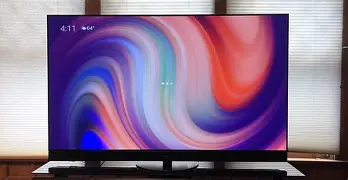
Perhaps the most controversial and discussed difference between the Z95B and the Z95A is the operating system. The Z95B utilized Panasonic’s proprietary "my Home Screen" OS. It was a minimalist, fast, and relatively simple interface. While many users loved its lack of clutter, it suffered from a significant "app gap," often lacking local niche apps or the most advanced versions of global streaming services. Users often found themselves needing an external streaming stick to get the most out of their premium panel.
With the Z95A, Panasonic has moved to Amazon’s Fire TV platform. This is a massive shift in philosophy. By integrating Fire TV natively, the Z95A gains access t…
Audio Performance: The 360 Soundscape PRO
Both the Z95B and Z95A are unique in the OLED market for their integrated audio systems. Unlike most TVs that require a soundbar to sound decent, these flagships feature Technics-tuned arrays. The Z95B introduced a sophisticated system with up-firing and side-firing speakers designed to bounce sound off the ceiling and walls to create a Dolby Atmos bubble.

The Z95A refines this with the "360 Soundscape Pro." While the physical speaker layout remains similar, the processing has been tuned to work more effectively with the room’s acoustics. It features "Pinpoint" and "Area" sound modes, allowing you to direct audio to a specific corner of the room—useful if someone is sleeping nearby while you want to hear the dialogue clearly. While neither can truly replace a dedicated 7.1.4 home theater setup with separate speakers, the Z95A provides arguably the best "out of the box" audio experience of any TV on the market today, with slightly better bass response and a wider soundstage than the Z95B.
Detailed Comparison: Z95A vs. Z95B
| Feature | Panasonic Z95B | Panasonic Z95A |
|---|---|---|
| Panel Type | Master OLED Pro (Standard High Brightness) | Master OLED Ultimate (MLA Technology) |
| Peak Brightness | Approx. 1,000 - 1,100 nits | Approx. 1,800 - 2,100 nits |
| Processor | HCX Pro AI Processor | HCX Pro AI Processor MK II |
| Smart Platform | my Home Screen | Fire TV Built-in |
| Max Refresh Rate | 120Hz | 144Hz |
| HDR Formats | HDR10+, Dolby Vision IQ, HLG | HDR10+ Adaptive, Dolby Vision IQ, HLG |
| Audio System | 360 Soundscape (Technics Tuned) | 360 Soundscape Pro (Improved Directivity) |
Pros and Cons: The Z95B vs. Z95A Journey
Panasonic Z95B
- Pro: Extraordinary color accuracy out of the box, requiring minimal calibration for movie lovers.
- Pro: Reliable "my Home Screen" OS is fast, lightweight, and doesn't track user data as aggressively as others.
- Pro: Excellent heat management ensures the panel stays bright without aggressive dimming during static content.
- Con: Limited app support means many users still need a Chromecast, Fire Stick, or Apple TV.
- Con: Lacks the peak luminance punch required to truly make HDR highlights pop in sunlit rooms.
Panasonic Z95A
- Pro: MLA technology provides a massive leap in brightness, making it the best OLED for bright environments.
- Pro: Fire TV integration offers the most comprehensive app support and smart home connectivity in Panasonic history.
- Pro: 144Hz support and improved game mode make it a genuine competitor for high-end PC gaming.
- Con: The Fire TV interface can feel cluttered and advert-heavy compared to the previous minimalist OS.
- Con: The significant price premium at launch may be hard to justify for those who don't need extreme brightness.
Buying Guide: Who Should Upgrade?
When deciding whether to move from the Z95B to the Z95A, it is essential to look at your specific viewing environment and content habits. The transition is not just about a newer model year; it is about a change in technology and user philosophy. Below are the three primary use cases where an upgrade is most—and least—beneficial.
Discover deals on Electronics — updated daily.
Shop Amazon →The "Bright Room" Viewer
If your television is located in a room with large windows, skylights, or significant ambient lighting, the Z95A is a game-changer. The Micro Lens Array (MLA) technology and the Master OLED Ultimate panel address the one traditional weakness of OLED: daylight visibility. While the Z95B manages reflections well, the Z95A’s sheer luminance allows it to punch through glare and maintain high-contrast visuals that the older model simply cannot match. If you find yourself closing the curtains every time you want to watch a movie during the day, the Z95A is the solution you have been waiting for.
The High-End Gamer
If you own an NVIDIA RTX 40-series or 50-series GPU, or a high-end AMD Radeon card, the Z95A’s 144Hz support is a significant draw. While 120Hz on the Z95B is excellent for PlayStation 5 and Xbox Series X, the extra headroom of 144Hz provides a smoother experience for PC players. Additionally, the improved Game Control Board and the ultra-low input lag make the Z95A feel more like a dedicated monitor and less like a repurposed TV. If gaming is your primary passion, the Z95A offers a more future-proofed platform.
The Movie Purist and Home Cinema Enthusiast
This is where the decision becomes more difficult. If you primarily watch movies in a light-controlled environment (a "bat cave" or darkened room), the Z95B is already performing at 95% of the Z95A’s level in terms of color fidelity and black levels. While the Z95A has brighter highlights, the difference in a dark room is less "night and day" and more about subtle spectral glints—the sparkle on water or the glow of a lightbulb. If you are satisfied with the smart TV features of your Z95B (perhaps because you use an Apple TV 4K) and your room is dark, the Z95B remains one of the finest TVs ever made. In this specific scenario, an upgrade may yield diminishing returns.
Conclusion
The Panasonic Z95A represents a defining moment for the brand. By embracing MLA hardware for extreme brightness and Amazon’s Fire TV for a modern software experience, Panasonic has successfully modernized its flagship formula. The Z95B is an incredible achievement—a TV that perfected the traditional OLED panel with elite processing and sound. However, the Z95A moves beyond perfection of the old standards and sets new ones. It is brighter, smarter, and more versatile. If you value peak HDR performance, play high-end games, or want a one-box solution that doesn't require an external streamer, the Z95A is the clear winner. For the Z95B owner who watches in the dark and prefers simplicity, the older model still holds its own, but there is no denying that the Z95A has claimed the crown as the ultimate expression of OLED technology.