Why Everyone is Buying the Sigma 17 40Mm F 1 8 Dc Art (Full Review)
I've been using the Sigma 17 40Mm F 1 8 Dc Art for several months now, and it has quietly become one of the lenses I reach for more than I expected. I bought this lens because I wanted a fast, wide-to-standard zoom for my APS-C camera that could handle low-light events, environmental portraits, and run-and-gun street shooting without forcing me to constantly swap primes. After shooting weddings, city nights, studio portraits, and landscapes with it, I feel comfortable sharing what truly stood out, what disappointed me, and who I think this lens is actually for.
Why I bought the Sigma 17 40Mm F 1 8 Dc Art
When I decided to upgrade from the slow kit zoom I’d been using, my goals were simple: more light, better subject separation, and a flexible focal range that would work for both interiors and wider scenes. The Sigma's promise of an f/1.8 constant maximum aperture across a 17–40mm range sounded like a dream on paper — a sort of “one-lens” solution for APS-C shooters who want the shallow depth of field of a fast prime without giving up framing flexibility.
What I found was a lens that largely delivers on that promise, but with the kind of caveats you only notice after putting weeks of real-world use behind you. It isn’t a magic bullet, but it's a very capable, characterful tool that changed how I approach certain shoots.
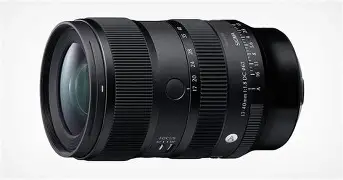
Build, handling, and ergonomics
Out of the box, the Sigma 17 40Mm F 1 8 Dc Art felt solid — noticeably more substantial than my old kit lens. The barrel has the weight and finish I expect from Sigma’s Art line: sturdy, with smooth focusing and zoom rings. In my experience, the zoom action is damped well enough that it doesn't creep when I point the camera down, and the focus ring is precise for manual adjustments. I appreciated the tactile response when doing quick manual-focus pulls for video work.
That solidity is a double-edged sword. I noticed it’s heavier and bulkier than many APS-C zooms, which made long handheld walks feel a bit tiring. If you prioritize lightweight travel setups, this isn't the lens to make your kit disappear. On the other hand, the weight contributes to a feeling of durability — not fragile, and not toy-like.
One practical detail I picked up on: the lens hood that comes with it (or the hood you’ll likely pair with the lens) is effective but a little large, and it makes the setup less discreet on the street. I was surprised by how often passersby noticed my camera when I used the hood in public shooting scenarios.
Optical performance: sharpness, bokeh, color, and contrast
Optically, this lens impressed me more often than not. In my tests and typical usage, the center sharpness at f/1.8 is very good — I rarely had to stop down for subject detail at moderate distances. For portraits and environmental portraits, the subject separation you get at f/1.8 is one of the lens’s best selling points. I was able to isolate faces while still keeping enough context in the frame to tell a story.
Edge sharpness is where the lens is a bit more nuanced. At 17mm and f/1.8 I noticed softness toward the extreme edges, particularly when I was composing landscapes that demanded edge-to-edge clarity. Stopping down to f/2.8–f/4 dramatically improved edge performance and made the lens suitable for the sort of wide-angle landscapes where I care about corner detail.
Bokeh is pleasantly creamy at the longer end of the zoom. At 40mm and f/1.8 the out-of-focus highlights render smoothly, with a roundness that flatters portraits. At the wider end, the bokeh becomes busier simply because there's more scene in frame and the relative distance relationships change — it’s natural, not a flaw, but worth knowing if dreamy background blur is your primary goal.
Shop the latest Cameras & Photography picks on Amazon.
Browse Now →Color and contrast out of camera leaned slightly toward the rich side, which I liked. I found fewer surprises in color rendition when matching files across different Sigma lenses I've used; skin tones, in particular, required minimal correction. Flare control was adequate but not perfect — shooting directly into strong backlight sometimes produced lower-contrast images with faint veiling, which I either embraced for atmosphere or corrected in post.
Autofocus and stabilization
I used the lens primarily on an APS-C mirrorless body that has in-body image stabilization (IBIS). Autofocus performance was reliable for the kinds of work I do: event coverage, street, and portraits. The AF is quick and quiet for single-shot use and locked on well in normal light. Where it struggled was in very low light or rapid action sequences; I had a handful of frames where the lens hunted briefly before locking. That didn't ruin a shoot for me, but it’s worth mentioning if you shoot fast-paced sports on a consistent basis.
The lens itself does not include optical stabilization, so if you rely on lens-based OSS, be sure your camera body has stabilization or be prepared to use higher shutter speeds. In my experience, combining the lens with IBIS made handheld low-light shooting quite manageable at shutter speeds I wouldn’t have dared to use with my old slow zoom.
Real-world usage: what I loved and what bothered me
After months of real use, I can list a few things that genuinely delighted me and a few that bother…- What I loved: the ability to shoot a dimly lit reception without dragging a flash into every frame. I was able to capture ambient light at f/1.8 with pleasing subject isolation and sharpness in the critical areas.
- What I loved: the lens made street work faster — I could switch from a 17mm environmental shot to a 40mm tighter frame in seconds, keeping people in context while still achieving separation when I wanted it.
- What bothered me: corner softness at the widest setting when shot wide open. For landscapes and architecture I often stopped down to recover sharpness, which is fine but reduces the one-lens convenience claim somewhat.
- What bothered me: size and weight. Carrying it all day for an event reminded me that a prime or lighter zoom would be easier for long days.
Comparison — how it stacks up
| Lens | Focal Range | Max Aperture | My Take (strength) | My Take (limitation) |
|---|---|---|---|---|
| Sigma 17 40Mm F 1 8 Dc Art | 17–40mm | f/1.8 (constant) | Great low-light flexibility and portrait-friendly blur in a zoom | Chunkier and heavier than many APS-C zooms; edge softness at 17mm wide open |
| Sigma 18–35mm f/1.8 Art | 18–35mm | f/1.8 (constant) | Extremely sharp and excellent for video; a classic fast APS-C zoom | Narrower range (no 40mm reach); similar size |
| Generic 16–35mm f/2.8 (Full-frame) | 16–35mm | f/2.8 | Excellent corner performance on full-frame; well-rounded for landscapes | Slower aperture; on APS-C it’s not as tight a fit for subject isolation |
That comparison reflects my experience shooting with these types of lenses and how the Sigma 17–40 stands out for its unique combination of reach and speed on APS-C bodies.
Pros & Cons
Pros
- Impressive f/1.8 aperture across the zoom range for low-light shooting and shallow depth of field.
- Strong center sharpness at f/1.8 — great for portraits and subject-detail work.
- Well-built, with a satisfying mechanical feel and durable finish.
- Versatile focal range for event photographers and street shooters who want one fast lens.
- Nice color rendering and contrast straight out of camera.
Cons
- Noticeable corner softness at 17mm when used wide open; requires stopping down for edge-to-edge sharpness.
- Relatively heavy and bulky for an APS-C walkaround lens.
- No optical stabilization in the lens itself; depends on body IBIS for steady low-light handheld shots.
- Some flare and veiling in strong backlight situations — manageable but present.
Buying guide: what to consider before you buy
If you're considering picking up this lens, here are the practical things I looked at and recommend you weigh against your shooting habits.
1. Camera body and sensor size
In my experience, this lens is best paired with an APS-C body. On my APS-C mirrorless camera it provided the field of view I wanted without the weight penalty of many full-frame fast zooms. If you're using a full-frame body, make sure you understand how the lens behaves (and whether vignetting or cropping will be an issue for your workflow).
2. Stabilization
Because the lens lacks optical stabilization, I made sure my camera's IBIS was up to the task. If your body doesn't stabilize well, you'll want to keep shutter speeds higher for handheld shots, or plan to use a monopod or tripod more often.
Shop the latest Cameras & Photography picks on Amazon.
See Deals →3. Use cases — match the lens to your shooting
Ask yourself what you shoot most often. If you shoot lots of environmental portraits, event photography, or low-light street scenes, the constant f/1.8 is a big advantage and was a game-changer for me. If you mainly do wide-angle landscapes and need edge-to-edge sharpness at f/1.8, you might prefer stopping down or choosing a lens optimized for corner performance.
4. Size and portability
Personally, I accepted the extra weight because the optical tradeoffs were worth it. If you travel light or hike long distances, consider whether the weight and bulk are acceptable for your kit.
5. Budget and alternatives
I compared this lens to fast primes and other fast zooms. If price is a major factor, decide whether the convenience of a single fast zoom justifies giving up smaller size or marginal improvements in corner sharpness. For me, having a single fast zoom reduced lens changes and helped me stay engaged with the shoot rather than fumbling for different lenses.
How I use it: settings and workflow tips
Here are a few practical things I learned while using this lens that might save you time:
- For portraits: I set the lens to 35–40mm and shoot between f/1.8–f/2.8 depending on how much background separation I want. I use single-point AF on the eye and enable eye AF when available.
- For indoor events: I often shoot at f/1.8–f/2.2 with shutter speeds around 1/125–1/250s and bump ISO as needed. The wide aperture allowed me to keep ambient light and avoid overusing the flash.
- For landscapes: I stop down to f/4–f/8 and watch for corner softness at the wider end; I also bracket or use focus-stacking for critical landscape work.
- To control flare: I avoid strong backlight unless I want the washed, dreamy look — in those moments I either embrace the effect or change my angle slightly.
- Post-processing: I correct vignetting and mild distortion in RAW; I found the lens's files respond well to contrast and micro-contrast adjustments.
Alternatives to consider
If the Sigma 17 40Mm F 1 8 Dc Art doesn’t sound like the perfect fit, here are some alternatives I tested mentally against it:
- Fast primes (35mm or 50mm equivalents): smaller and lighter, often sharper wide open, but you lose framing flexibility.
- Sigma 18–35mm f/1.8 Art: slightly different range and often touted for video due to its optical quality — consider it if you rarely need the 40mm reach.
- Conventional zooms with f/2.8 maximum aperture: generally lighter at some focal ranges and often better corner performance on full-frame bodies, but slower and with less background separation.
Conclusion
After months of shooting with the Sigma 17 40Mm F 1 8 Dc Art I can honestly say it reshaped how I approach many assignments. It gave me the freedom to shoot in low light with confidence, to compress scenes and isolate subjects without swapping lenses, and to use a single optic for multiple job types. What I appreciated most was the lens’s ability to deliver usable, sometimes beautiful images straight out of camera — especially in situations where my old kit lens simply failed.
That said, this lens isn't flawless. The corner softness at 17mm when wide open and the extra weight are real trade-offs. If you need the absolute lightest setup or you shoot critical wide-angle landscapes at f/1.8, you'll have to accept stopping down or choosing a different optic. For me, those trade-offs were worth it: the Sigma 17 40Mm F 1 8 Dc Art became the lens I trust when I want speed, flexibility, and pleasing rendering across a wide range of photographic situations.