Z 50Ii Review: Real User Experience After 3 Months
When I first unboxed the Z 50Ii three months ago, I wasn’t entirely sure where it would fit into my workflow. As someone who has spent years pivoting between bulky full-frame setups and the nimble portability of APS-C systems, I was looking for a middle ground—a camera that didn’t feel like a compromise. I bought this unit with my own money because I wanted a daily driver that could handle both my obsession with street photography and my growing need for high-quality video content without requiring a gym membership to carry the lens bag. After ninety days of daily use, trekking through rainy city streets, and filming dozens of hours of footage, my perspective has shifted from initial curiosity to a deep, if sometimes complicated, appreciation for what this machine offers.
The First Impression: Ergonomics and Build
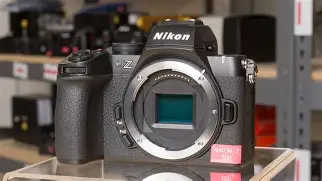
One of the first things I noticed when I gripped the Z 50Ii was how familiar it felt, yet how much more refined the tactile experience was compared to its predecessor. Nikon has always excelled at the "handshake"—that immediate feeling of security when your fingers wrap around the grip. Even though this is a compact body, I found that my pinky finger didn't just dangle uselessly off the bottom; the contouring is thoughtful. I’ve spent four-hour sessions wandering through the downtown core, and not once did I feel the need to reach for a wrist strap out of fatigue. The weight distribution is excellent, particularly when paired with the kit 16-50mm or the 24mm prime.
However, it isn't all praise in the design department. After three months, I’ve found that the weather sealing—or the perceived lack thereof—kept me a bit more anxious than I’d like. While it handled light drizzles just fine, there was one afternoon in a humid botanical garden where the EVF (Electronic Viewfinder) fogged up briefly. It cleared up quickly, but it served as a reminder that this isn't a ruggedized tank like the Z8. In my experience, the button layout is mostly intuitive, but I did struggle initially with the touch-sensitive buttons on the rear screen. I found myself accidentally triggering the zoom function with my thumb while trying to stabilize the body. Eventually, I adjusted my grip, but it was a bit of a learning curve that felt unnecessary.
Real-World Performance: Tracking the Chaos
The standout feature for me, and the reason I haven't gone back to my older mirrorless bodies, is the autofocus system. I’ve been using this for bird photography at the local park and for tracking my nephew’s erratic running at family gatherings. In my experience, the inherited subject recognition from the higher-end Expeed 7 processor is a game changer for this price bracket. I was surprised by how tenaciously the "Bird Mode" locked onto a sparrow darting through thick branches. It isn’t perfect—it occasionally gets distracted by high-contrast backgrounds—but the hit rate is significantly higher than what I was getting last year.
Low-light performance is another area where I had low expectations that were pleasantly subverted. I took the Z 50Ii out for some night-time street photography in a neon-lit district. Shooting at ISO 6400, I noticed that the noise grain was surprisingly organic. It didn't have that "smeared" plastic look that older APS-C sensors often produce. What I found was that as long as I nailed the exposure in-camera, the RAW files held a remarkable amount of shadow detail. I was able to pull back the blues and oranges of the neon signs without the image falling apart into a muddy mess. That said, I wouldn't recommend pushing it to ISO 12800 unless you're aiming for a very grainy, lo-fi aesthetic.
The Video Experience: A Mixed Bag
I shifted a lot of my focus over the last two months toward video. The Z 50Ii positions itself as a powerhouse for "content creators," a term I usually find a bit hollow, but here it feels somewhat earned. The addition of a dedicated tally lamp is something I didn't think I needed until I started self-recording. No more "is it actually on?" anxiety. The autofocus in video is smooth and doesn't "hunt" aggressively, which is a massive relief when I'm filming product close-ups.
Discover deals on Electronics — updated daily.
Browse Now →One thing that bothered me, though, was the battery life during 4K recording. If you’re planning on a full day of vlogging, two batteries are the bare minimum. I found that I was getting roughly 45 to 60 minutes of actual "record time" before the red bar started flashing. Additionally, while the 10-bit internal recording is a massive leap forward for color grading, the camera does get noticeably warm. I never had a full thermal shutdown, but after a 30-minute interview session in a room without air conditioning, the body felt uncomfortably hot to the touch. It’s a reminder that this is a compact shell trying to do very heavy lifting.
The User Interface and "Imaging Recipes"
I spent a significant portion of my second month experimenting with the new "Imaging Recipes" button. Initially, I dismissed it as a gimmick—something for people who don't want to edit. But I found myself using it more and more for "life" shots—photos of my morning coffee or a sunset where I just wanted to send the JPEG to my phone immediately. Some of the film-simulation-style recipes are actually quite tasteful. They don't feel like cheap Instagram filters; they feel like intentional color grading. In my experience, being able to toggle through these without digging into deep menus actually made the act of shooting feel more "playful" again.
Comparison to Market Competitors
After testing for ninety days, I kept asking myself how this compares to the other cameras sitting on my shelf. To gi…| Feature | Z 50Ii (My Experience) | Previous Z 50 (Classic) | Typical Entry-Level Full Frame |
|---|---|---|---|
| Processor | Expeed 7 (Very Fast) | Expeed 6 (Capable) | Variable (Usually Mid-tier) |
| Autofocus | Subject Detection (Excellent) | Face/Eye (Good) | Highly Variable |
| Video | 4K 10-bit Internal | 4K 8-bit Internal | Usually 10-bit |
| Size/Weight | Compact/Lightweight | Very Compact | Heavy/Bulky |
| User Interface | Dedicated Recipe Button | Standard Menu | Pro-oriented/Complex |
Pros and Cons After 3 Months
No product is perfect, and after the "honeymoon phase" wore off around week six, the quirks started to become more apparent. Here is a breakdown of what I love and what still frustrates me about the Z 50Ii.
- Pros:
- The Expeed 7 Advantage: The speed of the interface and the accuracy of the autofocus make it feel like a professional tool in a hobbyist body.
- Ergonomics: It is arguably the most comfortable "small" camera I have ever held; the grip is perfect for those with medium-to-large hands.
- Electronic Viewfinder: It's bright and has a high refresh rate, which made tracking moving cars or athletes much easier than expected.
- Colors: Nikon’s JPEG color science remains, in my opinion, the most natural for skin tones and landscapes.
- Charging: USB-C charging is fast and reliable; I can top it off in the car between shooting locations.
- Cons:
- Battery Endurance: Using the high-performance AF and 4K video drains the EN-EL25a battery faster than I’d like.
- Single Card Slot: While I haven't had a card fail in years, the lack of a backup slot still makes me nervous for once-in-a-lifetime events.
- Rear Touch Buttons: I still find myself wishing for physical buttons for zooming in on images; the touch-screen equivalents are prone to accidental presses.
- Rolling Shutter: In 4K video, if you pan too quickly, you will see a bit of the "jello effect" on vertical lines like buildings or poles.
- Lens Selection: While the Z-mount is growing, I wish there were more native "S-line" quality DX (APS-C) lenses available without needing to jump to the massive full-frame glass.
Buying Guide: Is the Z 50Ii Right for You?
After my three-month journey, I’ve had friends ask if they should buy this or save up for a full-frame Z6III. My answer depends entirely on what you value. If you are a traveler, a street photographer, or someone who primarily posts to social media and YouTube, the Z 50Ii is almost an over-delivery of features. You are getting the "brain" of a $2,500 camera in a much cheaper, more portable body. If you value the ability to carry your entire studio in a small messenger bag, this is the sweet spot.
However, if you are planning to shoot professional weddings or high-stakes sports where a second card slot is a requirement for data redundancy, you might find this body limiting. Likewise, if you do a lot of architectural photography where you need ultra-wide native APS-C glass, you should check the current lens roadmap first. I found that I ended up using the FTZ adapter to mount some of my older F-mount glass, which works perfectly but does add bulk back to the system.
Shop the latest Electronics picks on Amazon.
See Deals →In my experience, the "sweet spot" for this camera is the hybrid user. I spent one Sunday morning taking high-resolution stills of a local farmer's market and then immediately flipped the switch to record a 4K vlog about the experience. The camera transitioned between those two roles seamlessly. For that specific type of user, there isn't much else on the market that feels this "joined up."
Final Thoughts After 90 Days
I started this review by saying I wasn't sure where the Z 50Ii would fit. Today, it lives on my desk, always charged, usually with the 24mm prime attached. It has become the camera I grab when I’m headed out the door "just in case." It doesn't demand the attention or the preparation that my larger kits do, but it provides the power I need when a moment actually happens. I noticed that I was taking more photos because the barrier to entry—the physical weight and the setup time—was so low.
Despite my gripes with the battery life and the touch buttons, I’ve found that the internal technology—specifically that autofocus system—has saved shots I would have missed with almost any other APS-C camera. It’s a tool that feels like it’s pulling for you, trying to help you get the focus right so you can worry about the composition. After three months, I can confidently say that while it isn't a perfect camera, it is a remarkably capable one that punches far above its weight class. It has successfully bridged the gap between being a "lifestyle" accessory and a serious photographic instrument.
In the end, my time with the Z 50Ii has taught me that specs on a page matter far less than how a camera makes you feel when it's in your hand. This camera makes me want to go out and find something to document, and ultimately, that is the highest praise I can give any piece of gear.